
5 Revolutionary Gaming Mechanisms 2025 Reshaping the Experience
Gaming in 2025 is no longer defined by screens, controllers, or consoles. It’s an ecosystem that merges the human mind with advanced technology, where reality blends seamlessly with simulation. The modern gamer doesn’t just play — they exist within the game.
The last decade has brought breathtaking innovation, but 2025 has become the year of transformation. Developers, engineers, and researchers have worked together to create new gaming mechanisms that fundamentally reshape how we perceive interactivity and immersion. These breakthroughs are not just upgrades — they are revolutions.
This blog uncovers the five revolutionary gaming mechanisms of 2025 that are redefining entertainment. From AI-driven adaptive systems to quantum cloud immersion, we’ll explore how these technologies enhance player response, emotional connection, and sensory realism like never before.
1. Adaptive Artificial Intelligence – The Birth of Living Games
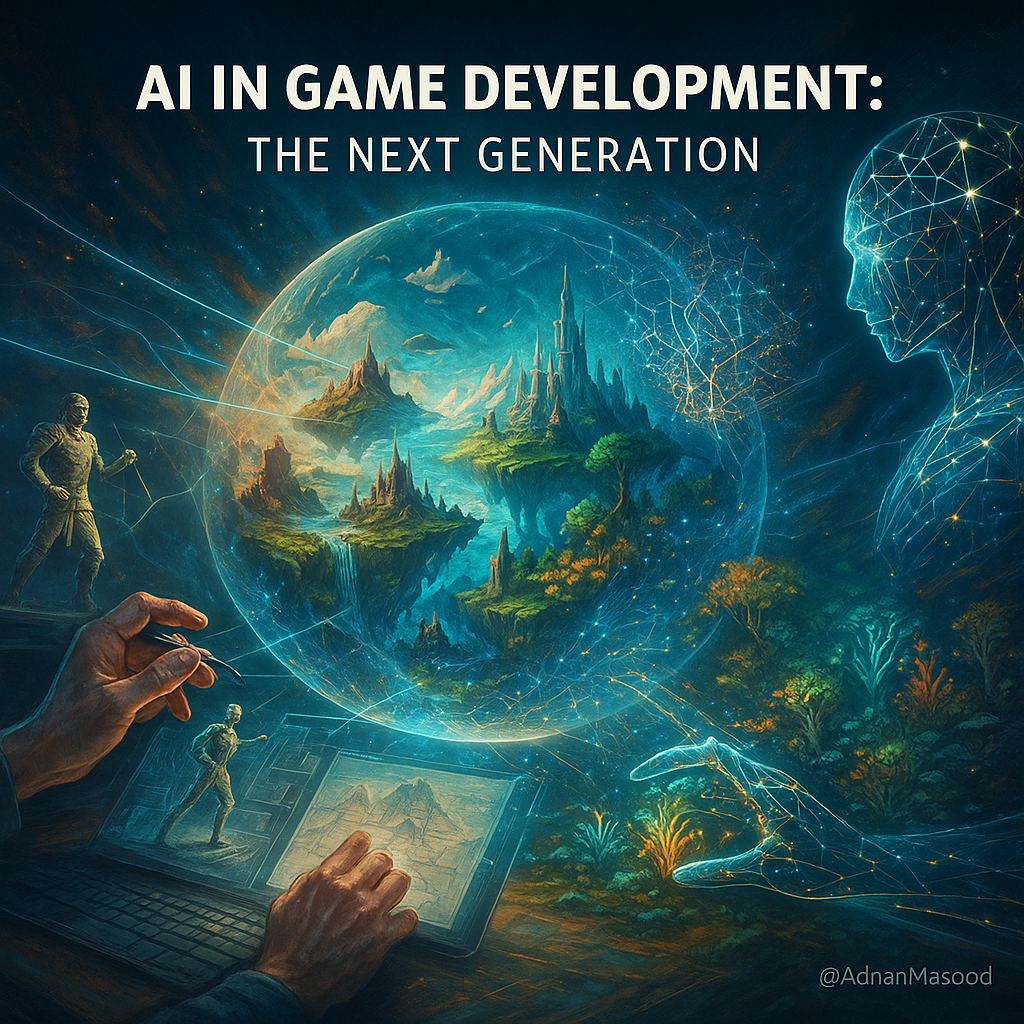
For years, Artificial Intelligence has influenced gaming through basic NPC (Non-Player Character) behaviors or scripted logic. But in 2025, AI has evolved into something extraordinary — an adaptive organism that learns, reacts, and coexists with the player gaming mechanisms
The new generation of AI mechanisms can analyze player habits, decision patterns, and emotional responses to craft gameplay that’s alive and unpredictable. Instead of facing repetitive missions or fixed outcomes, players now enter a dynamic story where every decision changes everything gaming mechanisms
In games like Project AURA and Eternal Nexus, the AI tracks your strategies and adapts enemies, allies, and even entire ecosystems based on your personal playstyle. The result is a world that feels sentient — one that challenges you uniquely every time you log in gaming mechanisms
Even more impressive is emotional AI. Through biometric scanning and facial recognition, the system detects emotions like frustration, excitement, or focus, and tailors challenges accordingly. If you’re losing focus, the AI may trigger an easier encounter. If it senses adrenaline, it might amplify difficulty or speed to sustain engagement gaming mechanisms
This level of responsiveness transforms gaming into an emotionally intelligent experience. Players form bonds with AI companions that genuinely “care,” creating emotional depth once thought impossible in digital entertainment. It’s not just gaming anymore — it’s relationship building gaming mechanisms
AI-driven games are now storytellers, psychologists, and opponents rolled into one. By 2025, adaptive AI has turned static code into living creativity.
2. Neural Synchronization – Thought-Controlled Gaming
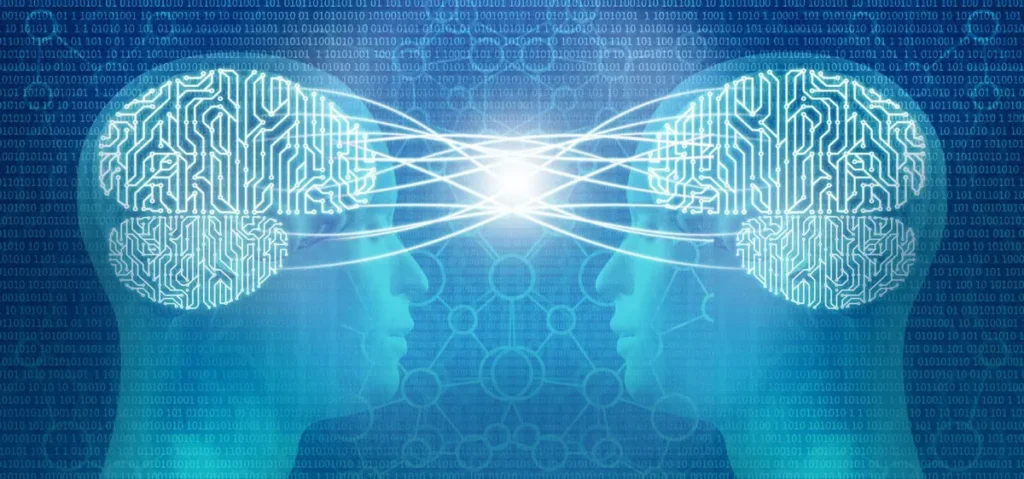
The next frontier of gaming is the human mind itself. Neural synchronization, also known as Brain-Game Interface (BGI) technology, is revolutionizing how players interact with games — no buttons, no joysticks, no lag. Just pure thought.
With non-invasive neuro-headsets reading brain signals in real time, players can control in-game movements, objects, and environments using mental focus. Instead of pressing keys, you think an action, and it happens instantly.
This isn’t science fiction anymore. Devices like NeuroLink Gear and Cerebral Sync VR have achieved precise EEG-to-command translation, allowing players to manipulate digital worlds effortlessly. Imagine summoning a spell through concentration, or opening doors by imagining motion — the entire interface becomes an extension of your consciousness gaming mechanisms
The gaming mechanism of neural synchronization introduces cognitive gameplay. Players must master mental clarity and focus to achieve success, creating games that train the mind while entertaining it gaming mechanisms
More advanced systems even monitor brainwave patterns to detect fatigue or stress. When players show signs of mental strain, the game dynamically adjusts pace or lighting to prevent burnout. This not only improves performance but also enhances mental wellness gaming mechanisms
The potential applications go beyond entertainment. Cognitive rehabilitation programs now use BGI-based games to help patients regain motor control and improve memory. It’s gaming that heals, strengthens, and evolves with the human mind.
2025 marks the moment when the line between thought and reality disappeared — where the mind became the controller, and imagination became the playground.
3. Haptic Realism – Feeling the Virtual
The sense of touch has always been the missing piece in digital immersion. Until now.
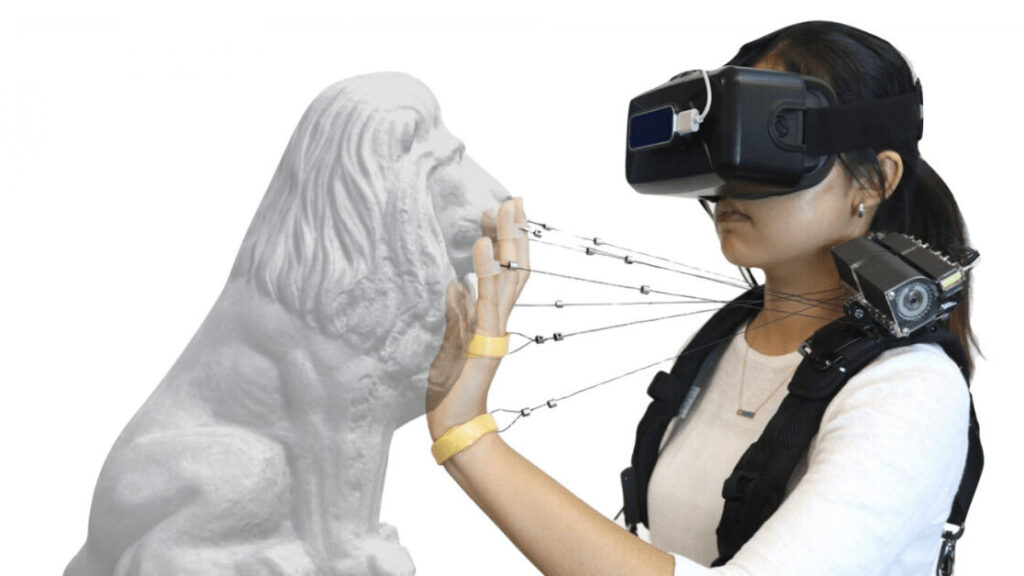
Haptic technology in 2025 has evolved into full-body realism. Players no longer just see the game — they physically feel it. Through wearable suits, gloves, and neural haptic bands, sensations are transmitted directly to the body, simulating texture, temperature, pressure, and motion.
When your character swings a sword, your arms feel resistance. When rain falls in a game, your skin senses the droplets. This is not vibration — it’s hyper-detailed tactile simulation gaming mechanisms
The TeslaSuit X and HaptX Pro are leading this revolution. These devices use thousands of micro-actuators that replicate physical sensations with astonishing precision. Combined with adaptive sound and lighting, players experience a level of realism that engages the entire nervous system.
This mechanism has changed how developers design games. Instead of relying on visual cues, creators now craft touch narratives. A stealth game might use subtle vibrations to signal danger nearby, or an adventure title might simulate warmth and chill to convey emotional tension gaming mechanisms
Haptic Realism enhances empathy as well. In story-driven experiences, players can physically feel a character’s heartbeat, pain, or emotional turmoil. It creates empathy-based immersion, connecting gamers not just to the world but to the very souls within it.
In esports and VR, haptic integration is now standard. Competitive players use tactile feedback to improve accuracy and spatial awareness, while VR explorers use it to feel physical presence in other worlds gaming mechanisms
With this advancement, the virtual has become tangible — gaming that doesn’t just stimulate your mind but involves your entire being.
4. Quantum Cloud Integration – Limitless Power and Accessibility
2025 is the year quantum technology met gaming — and it changed everything.
The mechanism known as Quantum Cloud Integration has eliminated the need for expensive hardware. Games no longer rely on local processing power; instead, they stream directly from quantum servers capable of performing billions of simultaneous calculations per second gaming mechanisms
This means photorealistic, physics-accurate, lag-free gaming on any device — even a basic smartphone. Quantum computing handles massive world simulations, AI decision trees, and real-time environment rendering, all within milliseconds.
Players in 2025 no longer download or install games. They stream existence. Worlds evolve in real time, with no loading screens or updates. Developers can modify mechanics on-the-fly, creating living ecosystems that never reset.
One of the most exciting aspects of this mechanism is Global Sync Play, which allows millions of players to interact in a single shared universe without latency. It’s like every gamer inhabiting the same continuous timeline — a true metaverse powered by quantum parallelism gaming mechanisms
This has also democratized the gaming industry. Because expensive consoles and GPUs are obsolete, gaming is more inclusive than ever. People from every background, region, and budget can experience top-tier next-gen performance.
Quantum cloud integration also enhances sustainability. With centralized processing, there’s less energy waste from manufacturing hardware. Gaming has become greener, smarter, and infinitely scalable gaming mechanisms
This technology has redefined what accessibility means. The gate to next-gen gaming is now open to all — powered not by devices, but by imagination gaming mechanisms
5. Sensory Immersion – Beyond Sight and Sound
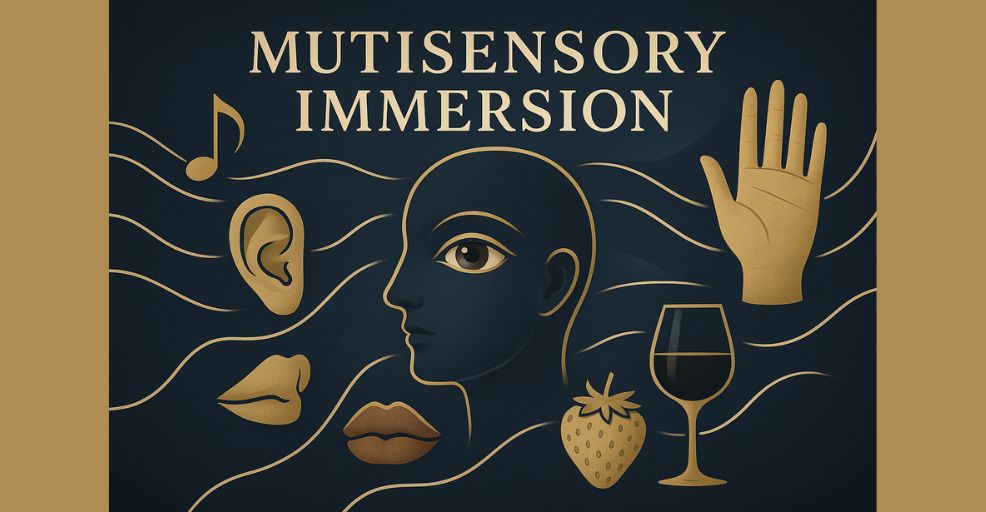
If there’s one mechanism that completes the revolution of 2025, it’s Sensory Immersion — the ability to engage all five senses in virtual environments.
Developers have introduced scent-emitting modules, thermal regulators, and air-pressure systems that replicate environmental realism. With devices like AromaSync Pods and ThermoVerse Systems, players can now smell forests, feel heat, and sense wind as if truly inside the game gaming mechanisms
Imagine entering an alien jungle and catching the scent of metallic plants, or walking through snow and feeling cold air brush your face. These details deepen connection, transforming a simple visual journey into a full-body sensory experience.
This technology works in harmony with haptic and neural systems. The brain interprets sensory feedback as real, achieving a phenomenon known as Total Reality Mapping. You no longer just perceive the game — you live within it gaming mechanisms
Sensory immersion is also reshaping storytelling. Horror titles use scent triggers and air density to intensify tension, while exploration games use gentle aromas and warmth to create serenity. It’s emotional design through environment — storytelling by sensation.
The educational and therapeutic possibilities are vast. Medical simulations use these systems to train surgeons under realistic conditions. Psychologists use them to treat phobias through gradual exposure. Even filmmakers are adopting it for multisensory cinema experiences gaming mechanisms
Gaming has evolved into something more profound: an artistic and emotional symphony where every sense participates gaming mechanisms
The Unified Future – When All Mechanisms Converge
What truly makes 2025 revolutionary is not just these individual mechanisms, but how they work together. Adaptive AI learns from your emotions. Neural synchronization lets you control worlds with your mind. Haptic realism allows you to touch them. Quantum clouds make them infinite. Sensory immersion lets you feel them.
The combination of these systems creates Cognitive Immersive Gaming — an ecosystem where technology and biology intertwine. It’s not just about entertainment; it’s about understanding the human experience through interaction, emotion, and imagination gaming mechanisms
Games have become laboratories of empathy, innovation, and consciousness. Developers now design worlds that respond to who you are rather than what you do. Every decision, heartbeat, and neural impulse shapes reality inside the game.
The boundary between player and environment is dissolving. Soon, gaming won’t be something we do; it will be something we are gaming mechanisms
The Emotional Core – Why It Matters
At the center of all technological evolution is emotion. Every mechanism aims to make games more personal, more alive, and more human. Players crave experiences that resonate — victories that feel real, failures that teach, and stories that live beyond the screen gaming mechanisms
This emotional grounding is what makes 2025’s innovations special. Technology is no longer the focus; connection is. AI empathy, neural engagement, and sensory storytelling are not about data — they’re about feeling understood.
The best games of 2025 don’t just test reflexes; they mirror your heart. They remind you that behind every pixel and algorithm lies a pulse — yours gaming mechanisms
The Road Ahead – Toward True Reality
As we move beyond 2025, the trajectory of gaming mechanisms points toward a fully unified sensory-mind interface. Soon, brain-to-environment systems will allow complete shared consciousness within digital realms.
Quantum servers will simulate universes that adapt collectively to millions of users, creating evolving societies governed by AI democracy. Neural implants will translate thought to motion seamlessly, while haptic and sensory devices will blur the final line between existence and imagination.
Gaming will not be an escape from reality — it will become reality. A tool for learning, therapy, communication, and even consciousness exploration.
This transformation doesn’t signify the end of traditional gaming, but its transcendence. We are witnessing the evolution of one of humanity’s greatest storytelling mediums into something truly infinite.
The gaming revolution of 2025 is far from its peak. What we’re witnessing right now is only the foundation of an entirely new digital civilization — one where entertainment merges with neuroscience, artificial empathy, and shared consciousness. The five mechanisms we explored earlier are not isolated inventions; they are evolving organisms, continuously learning from players, developers, and global interaction data. Let’s dive deeper into how each mechanism is expanding beyond expectations and shaping a future that redefines human connection through gaming.
Expanding on Adaptive AI — From Code to Consciousness
The adaptive AI that powers today’s most advanced games no longer behaves like programmed software; it acts more like an intuitive storyteller. In 2025, AI systems now process terabytes of behavioral data to learn who you are as a player. They can measure the time you spend observing the environment, the frequency of your exploration, and even the hesitation between your decisions. All of this is used to build a psychological profile that fuels narrative personalization.
Consider a narrative-driven adventure like Echo Protocol, a 2025 blockbuster known for its “Sentient Director.” This AI doesn’t just script missions — it builds relationships with players. It remembers your past actions across play sessions and adapts its dialogue, challenges, and moral outcomes. If you favor diplomacy, the world becomes politically complex; if you prefer chaos, it pushes you toward redemption arcs. Each player effectively co-creates their own story.
Adaptive AI is also turning into a creative collaborator. Indie studios are now using generative AI companions to write quests, voice dialogues, and animate expressions dynamically. Developers no longer have to pre-record thousands of voice lines — the AI generates them live based on narrative context and emotional tone. The result is a level of storytelling spontaneity that feels almost human.
Perhaps the most futuristic trend is AI social ecosystems. Online games now use AI-generated citizens that live, trade, and communicate autonomously. These characters remember encounters with real players, send messages, and evolve their own communities. In effect, AI has become a second civilization inside digital worlds — a population of artificial beings coexisting with humans in shared virtual societies.
Deepening Neural Synchronization — The Mind as Controller and Canvas
Neural synchronization has advanced rapidly through bio-adaptive calibration. In early versions, players needed to wear tight-fitted EEG caps to transmit brain signals. But as of 2025, nanofiber sensors embedded in lightweight headbands can read micro-currents from the scalp with 99% accuracy.
These neural mechanisms now go beyond simple command interpretation. They analyze emotional and cognitive states to adjust game rhythm, color saturation, and even sound frequency in real time. A racing game, for instance, can detect when your focus wavers and subtly amplify color contrast or reduce background noise to help you regain concentration.
One of the most talked-about innovations is co-operative neural linking — multi-player synchronization where two or more users’ brainwaves align temporarily for shared tasks. In VR co-op puzzles, partners can sense each other’s stress or excitement through subtle vibration cues or visual feedback. It’s team communication on a biological level, far faster than voice chat or gestures.
Medical researchers are taking notice. These neural mechanisms are being tested for treating ADHD and PTSD by retraining brainwave stability through gamified therapy. Players who engage in focus-based neural games show measurable improvements in attention and emotional regulation. Gaming, once dismissed as escapism, is now proving to be a legitimate form of cognitive enhancement.
Some futurists predict that by 2030, neural synchronization could evolve into full-sense telepresence — where multiple minds share the same virtual consciousness for brief periods. Imagine exploring a world literally through another player’s eyes, feeling their reactions, and building empathy through shared experience. It’s both thrilling and philosophical — a digital mirror of human connection.
Haptic Realism’s Evolution — Beyond Wearables
The tactile revolution continues to accelerate. In 2025, haptic feedback has escaped the confines of suits and gloves, moving into environmental haptics. These are room-scale systems that use ultrasonic waves and directed air pressure to create tactile sensations in mid-air.
For example, HoloTouch Pods installed in gaming lounges project invisible force fields that simulate the texture of virtual objects. You can literally run your hand through digital water or feel resistance when you push a virtual door. This mechanism doesn’t require physical contact at all — it’s touch generated from thin air.
At home, micro-wearable patches powered by electro-active polymers can mimic weight, temperature, or sharpness sensations across the skin. Developers use this to convey realistic combat feedback, environmental pressure, or emotional signals. In narrative games, a comforting pulse may replicate a heartbeat during an emotional scene, while sudden chills might accompany fear or suspense.
This goes hand-in-hand with AI. Adaptive systems learn your sensitivity levels and tailor tactile intensity accordingly, creating safe, personalized realism. Some haptic creators are also experimenting with chemical haptics, using safe compounds that trigger minor sensory reactions such as warmth, coolness, or vibration directly on the skin.
The entertainment industry has adopted haptic storytelling in ways that feel cinematic. In one 2025 release, Crimson Abyss, every physical emotion — falling rain, gusting wind, the vibration of footsteps — is felt as an orchestra of physical sensations. It’s gaming that doesn’t just happen on a screen but resonates through your entire body.
Quantum Cloud Expansion — Infinite Universes, Infinite Creativity
Quantum computing has quietly become the invisible engine behind gaming’s most complex creations. Each quantum bit (qubit) can exist in multiple states simultaneously, allowing exponential processing power. For gaming, this translates into real-time world generation of unimaginable scale.
Games powered by QuantumCloud+ can simulate ecosystems with millions of autonomous creatures, each governed by unique physics and AI logic. In older systems, such scale would crash servers; in 2025’s quantum environments, it unfolds flawlessly. Every tree, storm, and sunrise is procedurally computed through quantum probability fields — meaning no two players ever experience the same weather or landscape.
The global benefit is accessibility. Quantum streaming has ended the “hardware race.” Even a low-budget tablet can now run cinematic 240-fps gameplay because the heavy lifting happens remotely. The mechanism adapts dynamically to bandwidth, optimizing resolution without lag. It’s sustainable, equitable, and futuristic.