
INTRODUCTION

In the fast-paced world of digital entertainment, 2025 is a year where innovation and imagination collide. Gamers are no longer satisfied with ordinary visuals or predictable performance — they crave total immersion. This is where futuristic gaming modules step in, redefining the meaning of what it means to “play.”
These modules aren’t just devices; they’re portals into next-generation experiences. Whether it’s advanced haptic feedback, neural-response inputs, adaptive AI mechanics, or sensory synchronization, the way we engage with games is being transformed before our eyes.
Let’s explore the six most futuristic gaming modules of 2025 that are pushing boundaries and enhancing immersive experiences for every kind of gamer.
1. The NeuroSync Controller – Merging Mind & Machine

The NeuroSync Controller is at the heart of a technological revolution. Forget pressing buttons — this device reads your neural signals through a lightweight EEG band and converts them into real-time in-game actions.
Imagine aiming a sniper rifle by simply focusing your gaze or activating a shield by thinking of defense. The NeuroSync’s machine learning core adapts to every player’s unique brainwave pattern, making it an extension of human intention rather than a traditional gaming tool.
It’s powered by biofeedback sensors that track stress, emotion, and focus levels. If the system detects frustration, it can subtly adjust game difficulty or suggest cooldowns. This personalized layer adds emotional intelligence to gaming, making each session deeply human.
Professional gamers and VR streamers are already integrating NeuroSync to reduce reaction latency and increase precision by up to 40%. It’s more than an accessory — it’s the dawn of thought-driven gameplay, a step toward merging cognitive function with virtual environments.
2. The OmniSphere VR Pod – The Future of Physical Immersion
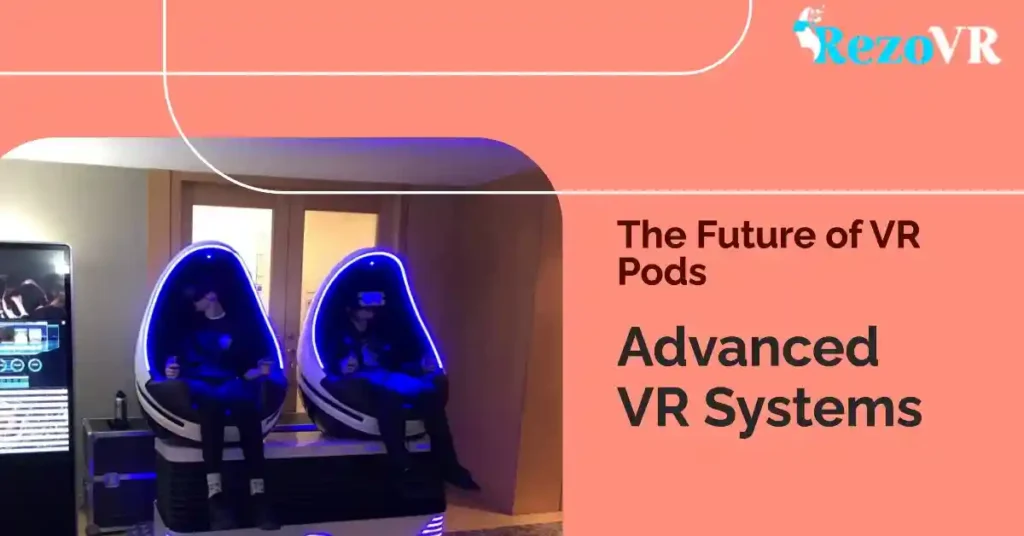
For those who crave full-body experiences, the OmniSphere VR Pod is a dream come true. This 360-degree motion capsule creates a multi-sensory universe where players feel every motion, vibration, and atmospheric change.
Using pressure sensors, climate control, and adaptive hydraulics, the OmniSphere can replicate environments like deserts, underwater depths, or zero gravity simulations. If you’re running through a storm in a survival game, you’ll feel wind resistance, rain droplets, and even fluctuating temperatures.
The pod’s surface adapts to user posture, allowing 360° rotation and full physical movement without causing motion sickness. It’s synchronized with leading engines like Unreal 5.4, enabling seamless environmental transitions and realistic rendering.
This isn’t just the future of entertainment — it’s the foundation of experiential gaming, where the player doesn’t just watch or control a world; they inhabit it.
3. QuantumPulse GPU Dock – Speed Beyond Limits

Every gamer knows that smooth performance fuels immersion. The QuantumPulse GPU Dock changes the way graphics are rendered by introducing quantum acceleration technology.
Instead of traditional GPU cores, this dock uses quantum tunneling processors capable of simultaneous multi-reality rendering. This means it can calculate millions of parallel lighting and physics simulations instantly, producing visuals so realistic they rival actual footage.
Gamers can experience 16K environments with zero lag and ultra-smooth 480Hz refresh rates. The dock even uses AI to anticipate player movements, preloading frames before they happen — effectively eliminating screen tearing or frame drops.
What makes QuantumPulse revolutionary is its universal compatibility. Whether it’s PC, console, or VR headset, it boosts rendering quality exponentially. Developers claim that this technology will shorten game development times by over 60% since environmental simulations can be generated in real-time.
The result? Total immersion powered by speed, intelligence, and visual fidelity that feels alive.
4. AeroHaptix Suit – Touch the Game
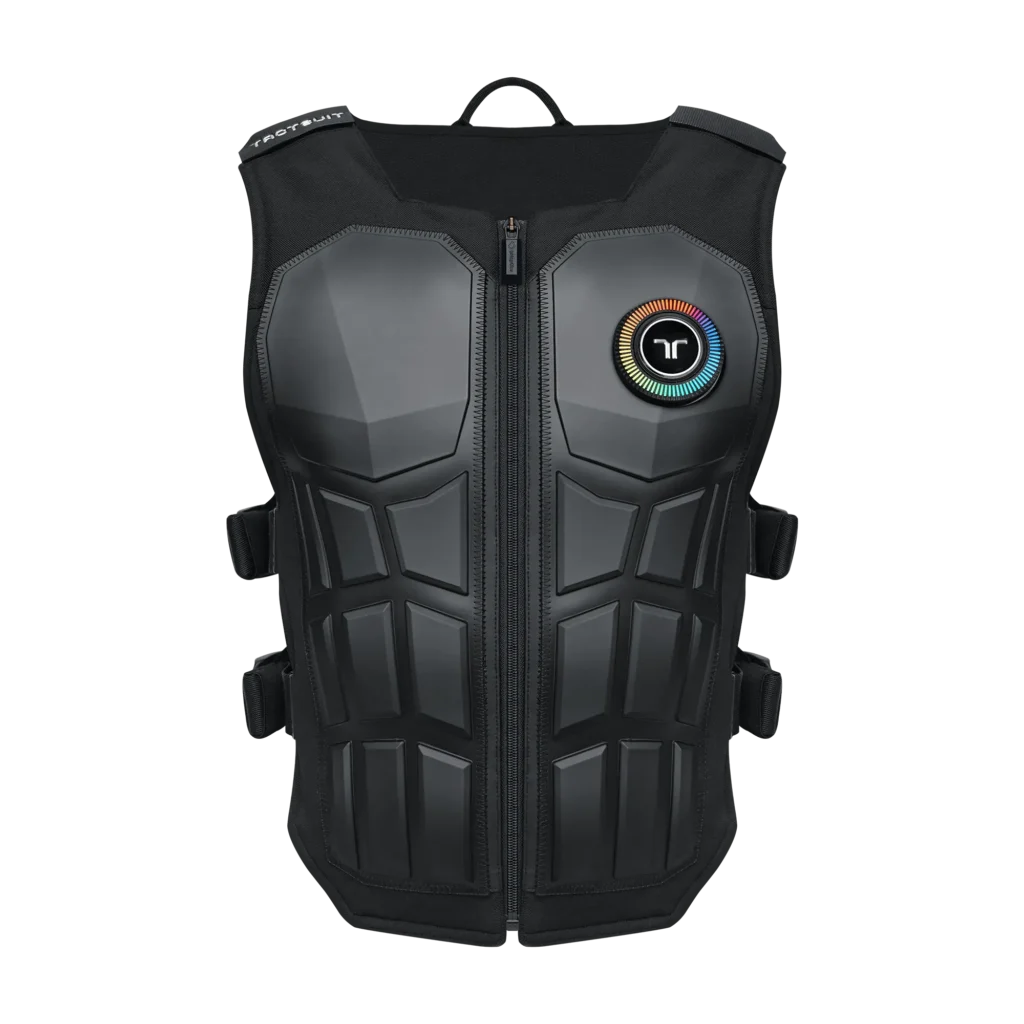
Visuals and sound can only go so far; true immersion demands touch. The AeroHaptix Suit is a wearable gaming module made of smart-fabric sensors that simulate tactile sensations.
From the recoil of a gun to the warmth of virtual sunlight, this suit communicates the physical nuances of a game directly to your skin. It works on a micro-pressure air-blast system, creating subtle vibrations, texture illusions, and muscle contractions to match on-screen events.
AeroHaptix doesn’t just stop at touch — it’s built with adaptive AI that customizes sensory patterns based on play style. If you’re a stealth player, it increases environmental awareness cues like footstep vibrations. If you prefer action, it amplifies feedback during combat.
It connects wirelessly to most VR headsets and consoles through low-latency Bluetooth 6.0, delivering instant response time. Streamers often use it to enhance realism in gameplay reactions — making their audience experience the thrill second-hand.
Gaming no longer happens on a screen — it’s happening on your skin.
5. HoloDock Projection Hub – Reality Reimagined
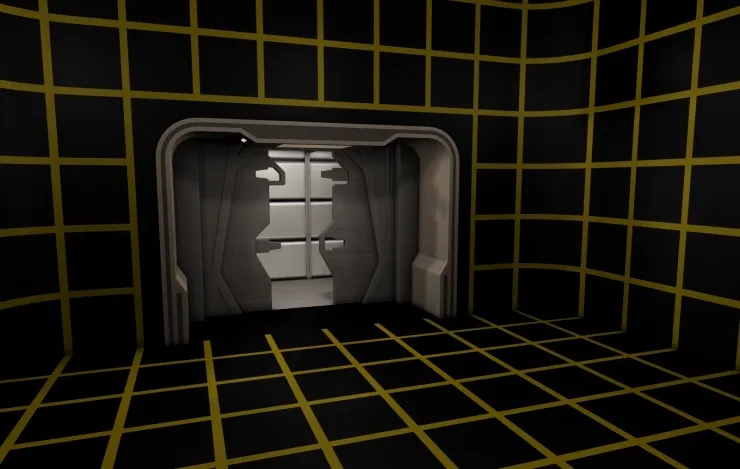
The HoloDock Projection Hub breaks down the boundary between the virtual and real world by creating 3D holographic game environments right in your room.
Instead of needing a headset or screen, it projects dynamic holograms onto open space. Using a combination of LiDAR scanning and micro-laser projection, it maps the surroundings and transforms your environment into a living, reactive world.
Imagine summoning a dragon in your living room or fighting off alien invaders that crawl across your walls. The system’s spatial AI ensures each object interacts realistically with surfaces, adjusting lighting and physics in real time.
HoloDock also supports multiplayer sync, allowing friends to see and interact with the same holographic environment using shared AR nodes. It’s the perfect blend of social play and physical immersion, redefining what living-room gaming means.
This module is especially popular in esports training setups and educational simulation games, making it a gateway between real life and digital storytelling.
6. SynTone Sensory Headgear – Hear & Feel the Future
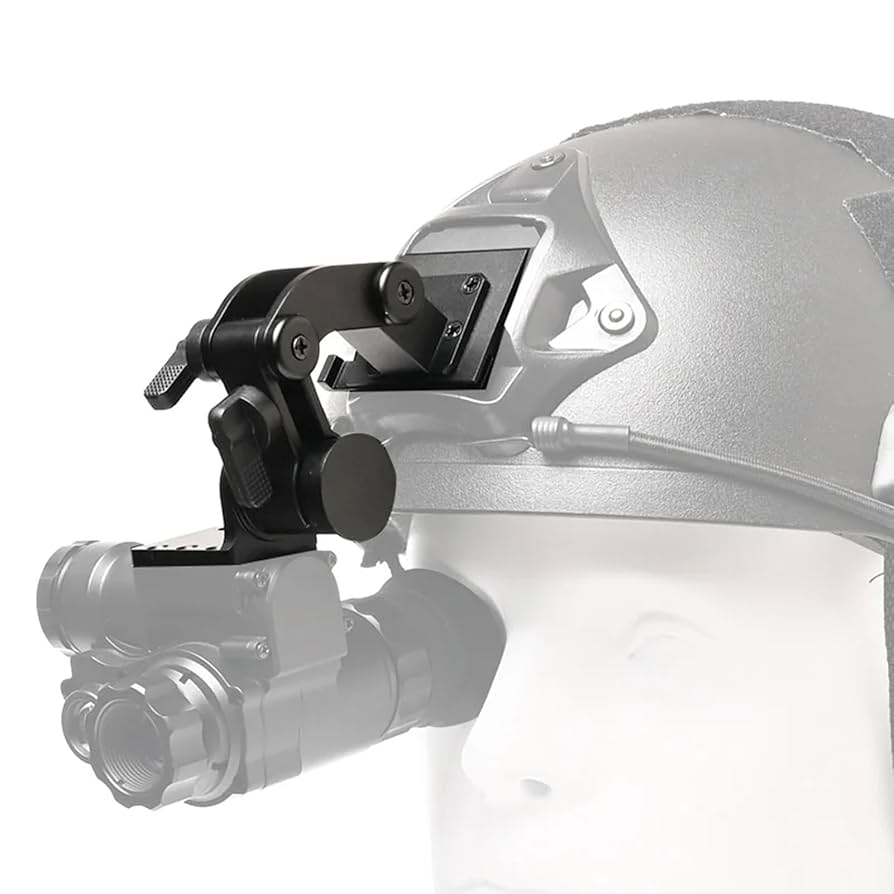
The SynTone Headgear is not your average gaming headset. It combines AI-driven sound mapping and vibrational resonance technology to give sound a physical presence.
Each frequency corresponds to a tactile vibration pattern, meaning explosions, whispers, or rainfall have unique physical sensations. It simulates 3D auditory touch, where players can feel the direction, distance, and intensity of sounds.
Developed by a team of acoustic neuroscientists, SynTone also adapts to your mood. When it senses elevated stress levels, it adjusts sound intensity or transitions music to maintain focus — acting almost like a personal emotion manager.
The module enhances spatial awareness, helping players locate opponents or hidden elements faster, which makes it invaluable in competitive gaming.
The result? A deeper, emotional connection between player and sound, where every note becomes part of the experience.
How These Modules Are Redefining Immersion in 2025
Each of these six gaming modules represents a distinct evolution in how gamers interact, feel, and live inside virtual worlds. Together, they’re forming the foundation of next-generation gaming ecosystems that merge physical, emotional, and cognitive dimensions.
Let’s break down how they’re reshaping the gaming landscape in 2025.
1. Multi-Sensory Synchronization
2025 marks the first year where all five senses are being integrated into gaming. Touch, temperature, sound, and even smell modules are being tested in experimental labs. When combined, they create full-spectrum immersion that goes beyond visuals.
Players can now feel tension, smell virtual environments, and even taste synthetic sensory cues using companion devices. This opens new doors for emotional storytelling and deeper engagement.
2. Cloud-Based Integration
All futuristic gaming modules now operate in sync with cloud gaming platforms like NVIDIA GeForce Now 3.0 and MetaStream. This ensures instant updates, seamless calibration, and shared experiences without heavy hardware setups.
Developers are designing games around these modules — meaning future titles will automatically adapt their environments based on what module you’re using.
3. Accessibility Revolution
The new generation of gaming modules focuses not only on immersion but also accessibility. Adaptive controls, haptic feedback for hearing-impaired players, and gesture-based interfaces for those with mobility challenges are changing how inclusive gaming can be.
By 2025, accessibility isn’t a feature — it’s a standard.
4. Emotional Realism
AI-driven modules can now sense players’ emotional states through facial recognition, heart rate, and EEG monitoring. Games respond dynamically — offering comfort, excitement, or relaxation as needed.
This evolution is transforming gaming into interactive emotional therapy, a trend embraced by wellness developers worldwide.
Why Futuristic Gaming Modules Matter
Beyond the cool factor, these modules are transforming industries far beyond entertainment. Educational institutions are using VR suits for physics simulations, medical teams for surgery practice, and architects for spatial design testing.
The impact is cross-disciplinary — what started as gaming tech is now improving training, learning, and human-machine collaboration globally.
Challenges Ahead
Despite their promise, futuristic modules face challenges like cost, calibration errors, and data privacy. EEG-based devices must secure neural data; haptic suits must manage temperature and comfort for long use.
But as manufacturing scales and AI calibration improves, these technologies will soon be mainstream — just as wireless headsets once were futuristic dreams.
The Rise of Holographic Gaming Interfaces: Merging Real and Virtual Worlds
The next stage of gaming in 2025 is unfolding before our eyes — and it’s holographic. These holographic gaming modules redefine what “playing” even means. No longer confined to flat screens, players are stepping inside living, breathing virtual worlds. With interactive holograms, gaming isn’t about pressing buttons anymore — it’s about movement, emotion, and connection.
Take the example of SpectraVision HoloCore, a futuristic module that projects a 360° holographic gaming field in any room. Using depth sensors and AI-driven environmental mapping, it turns your surroundings into a mixed-reality arena. Whether you’re slashing swords or flying starships, your actions sync seamlessly with holographic visuals that move with you gaming modules
The immersive experience feels astonishingly lifelike. Gamers have described it as “playing inside a dream that knows you’re there.” Every motion, sound, and pulse reacts dynamically, creating a fluid link between human reflexes and virtual stimuli.
Developers are leveraging quantum feedback systems, where the game adjusts its difficulty based on your performance and biometrics — if your heartbeat spikes, the AI softens intensity; if you get too comfortable, it amps the challenge. The result? Personalized, emotionally intelligent gameplay.
This is more than entertainment; it’s evolution. The holographic gaming modules movement shows how deeply gaming is fusing with neuroscience, optics, and behavioral AI — proving once again that innovation fuels immersion.
Adaptive Sensory gaming modules: When Games Feel You Back
One of the most exciting technological leaps in 2025 gaming is the Adaptive Sensory Gaming Module (ASGM) — a hybrid between AI and human emotion sensing. Imagine a controller that doesn’t just respond to your actions but reads your emotions in real time. This innovation marks a new frontier in immersive experience design.
The ASGM uses bio-feedback sensors, tracking your temperature, pulse rate, facial tension, and even pupil dilation. It tailors the environment accordingly: softening background tones when you’re stressed, adding sensory warmth when you’re losing focus, or dynamically changing music to match your excitement.
The brilliance of these gaming modules lies in their empathy — they understand the player. For example, in story-driven adventures, the narrative bends based on your anxiety or thrill levels. Horror titles can adapt to keep you scared — but not overwhelmed. This emotional alignment makes gameplay far more memorable.
One of the most successful ASGM prototypes is NeuroPulse X, developed by a Tokyo-based startup. NeuroPulse reads over 200 biometric markers per second and syncs them with the game engine using neural processing units (NPUs). The module connects through wireless micro-pads on your wrist, feeding live data to the console.
The result? A new genre of living games — ones that grow, shift, and respond alongside you. In the coming years, we’ll likely see major developers standardizing emotion-aware gaming modules as a core experience. It’s not about controlling the game anymore; it’s about co-evolving with it.
Quantum Motion Pods: Redefining Physical Engagement
While VR headsets gave us sight and sound immersion, Quantum Motion Pods (QMPs) are taking body integration to a new level. These futuristic gaming modules combine kinetic motion tracking, neural haptic feedback, and multi-directional tread systems — creating a fully embodied simulation chamber.
Picture this: you step into a sleek pod that scans your entire body. As the game begins, the pod generates real physical resistance and momentum through quantum magnets and motion gyros. You’re no longer pressing “W” to run — you’re actually running. The pod’s sensors keep you stationary in space, but your legs and arms move freely as if inside an infinite virtual landscape.
Gamers who tested early versions of the Quantum Motion Pod described the sensation as “running through another planet with gravity you can feel.” The neural haptic pads allow players to feel textures — sand crunches, rain drips, wind pressure — in real time.
Fitness experts have also praised QMPs for transforming gaming modules into active performance training. Instead of sitting for hours, players engage their whole body. This fusion of health and entertainment is one reason Quantum Motion Pods are being installed in esports arenas and even gyms.
The QMP isn’t just changing gameplay — it’s redefining how gaming modules interacts with the human body, merging fitness, fun, and futuristic design into one revolutionary experience.
AI-Powered Game Companions: Emotional Intelligence Meets Gameplay
Gaming in 2025 isn’t just about fighting enemies — it’s about forming emotional bonds with AI companions. The latest gaming modules integrate advanced neural AI capable of real-time empathy, learning your habits, tone, and preferences.
These aren’t the static NPCs of the past; they’re adaptive virtual allies that grow smarter and emotionally deeper the more you play. The best example is the EVA (Emotive Virtual Ally) system — a voice-interactive gaming modules companion that evolves with every game session. If you favor stealth over aggression, EVA adopts that strategy. If you seem demotivated, she encourages you with in-game humor or tailored advice gaming modules
Developers have trained EVA’s AI using thousands of human emotional models, enabling her to pick up subtleties like sighs, laughter, and hesitation. Over time, she becomes a true digital partner — not just an assistant, but a reflection of your playstyle.gaming modules
This evolution in AI gaming modules strengthens the emotional bridge between player and platform. It also redefines single-player gaming as something inherently personal, dynamic, and socially rich gaming modules
By 2025, these emotionally intelligent companions are not only enhancing the immersive experience, but also reshaping gaming’s psychological depth — making every victory, defeat, and dialogue more meaningful.
Haptic Reality Suits: Full-Body Feedback for Realism Unmatched
Among the most futuristic breakthroughs are the Haptic Reality Suits — wearable gaming modules that envelop your body in responsive sensors. These suits provide 360° tactile immersion, transmitting real-time sensations corresponding to in-game events. When rain falls in a game, you feel it; when you take damage, there’s gentle haptic feedback; when you hug another character, warmth radiates through the suit.
The flagship product in this field, the VibeSkin XR, uses thousands of nano-actuators that can simulate over 250 distinct tactile sensations. The suit’s design merges lightweight graphene material with embedded microchips, allowing flexibility without restricting movement gaming modules
The implications for esports and virtual collaboration are enormous. Competitive gamers can now “feel” positional awareness through directional vibrations, enhancing reflexes and strategy. Meanwhile, training gaming modules programs use these suits for virtual sports, space simulations, and emergency response drills.
With gaming modules like the VibeSkin XR, the immersive experience moves beyond visuals — it becomes physical reality. It’s no longer about escaping to another world; it’s about living in it.
Neural-Link Controllers: The Mind as the Ultimate Input Device
If there’s a holy grail in gaming innovation, it’s the Neural-Link Controller — a device that lets you play using your thoughts alone. These futuristic gaming modules are still experimental but progressing fast. In 2025, several companies have announced near-commercial prototypes that harness brain-computer interfaces (BCIs) to eliminate physical input devices entirely.
Instead of pressing buttons, the Neural-Link reads neural signals from your motor cortex and translates them into in-game actions. Want to jump, reload, or teleport? Just think it. The module decodes intent faster than hand-eye coordination could ever achieve.
One of the most promising versions, NeuroSync Pro, uses non-invasive EEG sensors built into a sleek headset. It learns your neural patterns over time, improving accuracy and speed. Paired with a haptic suit or holographic display, the experience feels effortless — like pure telepathy.
Beyond gaming, these modules have therapeutic potential too. For players with limited mobility, Neural-Link tech opens the door to accessible, high-performance play. It’s the democratization of gaming at a neural level.
The Neural-Link Controller proves that the future of gaming modules isn’t just immersive — it’s deeply human. It’s about merging technology with mind, blurring the line between imagination and interaction.