
Introduction: Esports Is More Than Just Playing Games
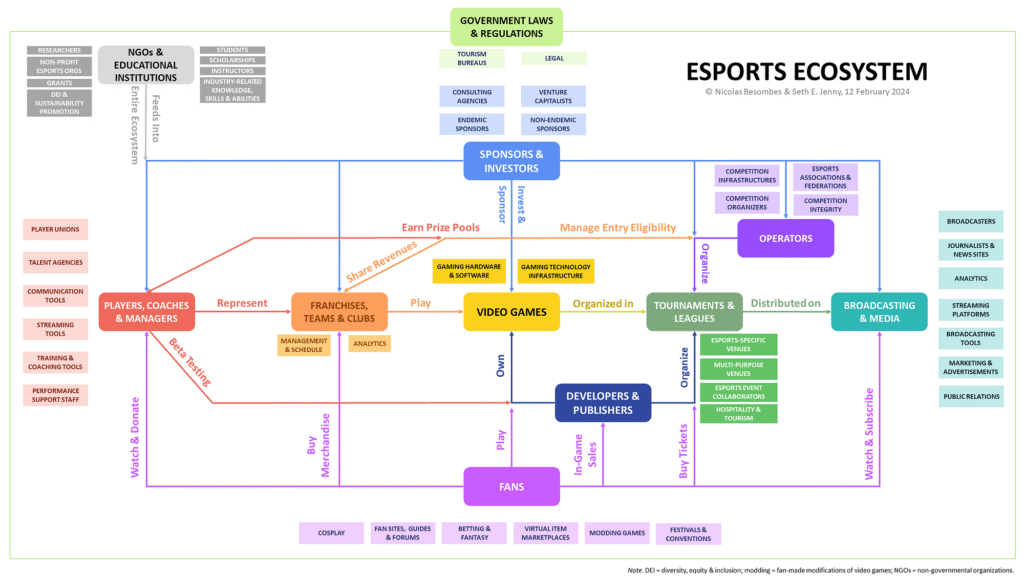
When people hear the word esports, they usually think about professional gamers, flashy tournaments, and big prize pools. What most people don’t see is the esports ecosystem working quietly behind the scenes. Esports is not just about winning matches; it is a complete system made up of players, organizers, communities, technology, and opportunities.
Understanding the esports ecosystem is important for anyone who wants to grow in competitive gaming. Whether you are an amateur player, a content creator, or someone exploring the esports industry, knowing how this ecosystem works helps you make smarter decisions and set realistic expectations.
This blog explains how the esports ecosystem functions, why it matters, and how players actually move forward inside competitive esports.
What Is the Esports Ecosystem?
The esports ecosystem refers to the complete network that supports competitive gaming. It includes everything that allows esports to exist and grow in a structured way.
Core Parts of the Esports Ecosystem
- Esports players (amateur to professional)
- Online esports tournaments
- Tournament organizers and platforms
- Coaches, analysts, and managers
- Streaming and content creation
- Brands and sponsors
- Gaming communities
If even one of these parts is weak, the entire esports ecosystem slows down.
Role of Esports Players in the Ecosystem
Esports players are the foundation of the esports ecosystem. Without players, there is no competition, no content, and no audience.
Different Types of Esports Players
- Amateur esports players – learning and competing in small events
- Semi-competitive players – consistent tournament participants
- Professional esports players – signed by teams, playing full-time
Most players stay in the amateur phase for a long time, and that’s normal. The ecosystem is designed to support gradual growth, not instant success.
Online Esports Tournaments: The Entry Gate
For most players, online esports tournaments are the first step into competitive gaming.
Why Online Tournaments Matter
- Easy access
- Low or zero cost
- Regular opportunities
- Skill-based competition
Online esports tournaments keep the ecosystem active by allowing thousands of players to compete daily without geographical limits.
These tournaments also help organizers test formats, discover talent, and build gaming communities.
Tournament Organizers: The Silent Backbone
Tournament organizers are one of the most underrated parts of the esports ecosystem.
What Organizers Do
- Create fair rules
- Manage match schedules
- Handle disputes
- Ensure competitive integrity
Good organizers build trust. Bad organizers damage the ecosystem by wasting players’ time and effort.
Players who understand this quickly learn to choose events carefully instead of joining every available tournament.
Esports Ecosystem and Competitive Structure
Competitive esports works in layers.
Typical Competitive Path
- Community tournaments
- Online esports tournaments
- Regional competitions
- Semi-professional leagues
- Professional esports events
Each layer prepares players for the next one. Skipping layers often leads to burnout or disappointment.
The esports ecosystem rewards patience more than raw talent.
The Importance of Communities in Esports
Gaming communities are where the esports ecosystem stays alive.
Community Functions
- Team formation
- Scrim coordination
- Knowledge sharing
- Emotional support
Discord servers, gaming groups, and social platforms are critical spaces where esports players connect, learn, and grow together.
Strong communities often produce stronger competitive scenes.
Esports Coaches and Analysts: Not Just for Pros
Many people believe coaching exists only at the professional level. In reality, coaches and analysts are becoming important even in amateur esports.
How They Support the Ecosystem
- Improve player decision-making
- Reduce trial-and-error learning
- Build structured practice routines
Even informal coaching within a team strengthens the esports ecosystem by improving overall competition quality.
Streaming and Content Creation in the Esports Ecosystem
Content creation plays a massive role in modern esports.
Why Content Matters
- Builds player visibility
- Attracts sponsors
- Educates audiences
Streaming online esports tournaments, sharing highlights, and posting match reviews keep the esports ecosystem visible and engaging.
Many esports careers start through content, not tournament wins.
Brands and Sponsorships: The Business Side
The esports ecosystem cannot survive without money.
Why Brands Invest in Esports
- Young audience reach
- High engagement
- Digital-first marketing
Sponsors don’t only look for champions. They look for:
- Consistency
- Professional behavior
- Community presence
Understanding this helps esports players approach sponsorships realistically.
Esports Industry vs Esports Ecosystem
The esports industry refers mainly to money, companies, and revenue.
The esports ecosystem focuses on growth, structure, and participation.
A healthy ecosystem eventually creates a strong industry. Chasing money without ecosystem growth leads to instability.
Esports Ecosystem and Skill Development
The esports ecosystem naturally develops skills beyond gaming.
Skills Players Gain
- Communication
- Time management
- Stress handling
- Team coordination
These skills remain valuable even outside esports, making competitive gaming a strong personal development platform.
Esports Integrity and Fair Play
Fair play is the foundation of the esports ecosystem.
Threats to Integrity
- Cheating
- Match fixing
- Smurfing
These actions damage trust and slow ecosystem growth. Players who respect rules gain long-term respect and opportunities.
Challenges in the Esports Ecosystem
The ecosystem is still evolving and faces real challenges.
Common Challenges
- Inconsistent tournament quality
- Lack of awareness
- Mental burnout
- Unrealistic expectations
Recognizing these challenges early helps players navigate esports more wisely.
Regional Growth of the Esports Ecosystem
The esports ecosystem grows differently in each region.
Key Growth Factors
- Internet accessibility
- Mobile gaming popularity
- Youth participation
Regions with strong grassroots esports scenes often produce the most talent over time.
Esports Ecosystem and Career Paths
Not everyone becomes a professional player, and that’s okay.
Career Options Inside the Ecosystem
- Coach or analyst
- Tournament organizer
- Content creator
- Community manager
The esports ecosystem offers multiple paths for people who stay involved long enough.
Long-Term Sustainability in Esports
Sustainability is about balance.
Sustainable Esports Growth Requires
- Mental health awareness
- Stable schedules
- Realistic goals
Burnout hurts both players and the ecosystem. Long-term thinking keeps esports healthy.
How New Players Should Enter the Esports Ecosystem
Beginner-Friendly Entry Plan
- Choose one game
- Join gaming communities
- Play small online esports tournaments
- Review matches honestly
- Stay consistent
Slow progress is still progress.
Esports Ecosystem and Technology
Technology quietly powers everything.
Tech That Supports Esports
- Anti-cheat systems
- Streaming platforms
- Match management tools
Better technology strengthens trust and improves competitive experiences.
Measuring Growth Inside the Esports Ecosystem
Growth is not just trophies.
Growth Indicators
- Better decision-making
- Improved teamwork
- Stronger community presence
These indicators show real progress even when wins are rare.
Final Thoughts: Why the Esports Ecosystem Matters
The esports ecosystem is not built for overnight success. It is designed for learning, competition, and gradual growth.
Players who:
- Respect the ecosystem
- Stay consistent
- Focus on improvement
eventually find their place, whether as competitors or contributors.
Esports rewards patience, discipline, and understanding far more than shortcuts. If you treat esports as a long-term journey instead of a quick win, the ecosystem will always have space for you
Grassroots Development in the Esports Ecosystem
The long-term strength of any esports ecosystem depends on its grassroots level. Grassroots esports refers to the earliest stage where players first experience competitive gaming in an organized form. These are usually small online esports tournaments, community-hosted events, or college-level competitions.
At the grassroots level, the goal is not profit or fame. The goal is participation and learning. A healthy esports ecosystem always prioritizes accessibility at this stage. When entry barriers are low, more players join, more teams form, and competition naturally improves.
Grassroots esports also acts as a testing ground. Players discover whether they truly enjoy competitive pressure, teamwork, and discipline. Many casual gamers realize at this stage that esports is very different from relaxed gaming, and that realization is important for the ecosystem’s balance.
How Amateur Players Sustain the Esports Ecosystem
Professional esports players receive most of the attention, but amateur esports players actually sustain the ecosystem. They are the largest group and the most active participants in online esports tournaments.
Amateur players:
- Register for frequent tournaments
- Keep communities active
- Provide viewership for streams
- Create demand for organizers and platforms
Without amateurs, the esports ecosystem would collapse into a small, closed circle. This is why tournament formats, ranking systems, and matchmaking tools are often designed with amateur players in mind.
Consistency matters more than talent at this level. Players who stay active for long periods become pillars of the ecosystem, even if they never turn professional.
The Role of Tournament Platforms in Competitive Esports
Tournament platforms act as connectors inside the esports ecosystem. They bring together players, organizers, and audiences into one structured space.
Modern platforms provide:
- Automated brackets
- Match reporting systems
- Anti-cheat integrations
- Ranking and leaderboard tools
These tools reduce chaos and improve trust. A well-designed platform allows competitive esports to scale efficiently, supporting thousands of players at once.
As the esports ecosystem grows, platforms become increasingly important in maintaining fairness and structure across online esports tournaments.
Skill Progression Inside the Esports Ecosystem
Skill progression in esports does not happen in a straight line. It moves in phases.
Early Phase
Players focus on:
- Basic mechanics
- Learning maps and rules
- Understanding team roles
Intermediate Phase
Players develop:
- Game sense
- Communication habits
- Strategic awareness
Advanced Phase
Players refine:
- Decision-making under pressure
- Adaptability
- Consistency across tournaments
The esports ecosystem supports this progression by offering different competition levels. Players naturally move upward as they improve, provided they remain patient.
Competitive Esports and the Importance of Structure
Structure separates esports from casual gaming. The esports ecosystem relies on structure to maintain legitimacy and growth.
Structure includes:
- Clear rules
- Scheduled matches
- Penalties for violations
- Transparent results
Without structure, competitive esports loses credibility. Players stop taking tournaments seriously, and communities lose trust.
Well-structured online esports tournaments encourage professionalism even among beginners, strengthening the entire ecosystem.
Team Stability and the Esports Ecosystem
Team instability is one of the biggest challenges in competitive esports. Many teams break apart after a few losses, which slows ecosystem growth.
Stable teams contribute positively by:
- Improving competitive quality
- Creating long-term rivalries
- Developing team identities
The esports ecosystem rewards teams that stay together longer because they improve faster and create more engaging competition. Learning to resolve conflicts internally is an underrated skill in esports.
Esports Ecosystem and Mental Health Awareness
Mental health is becoming an important topic in esports. Competitive pressure, public criticism, and long practice hours can affect players deeply.
A healthy esports ecosystem acknowledges:
- Burnout risks
- Performance anxiety
- Emotional fatigue
Communities that normalize breaks and honest conversations about stress tend to retain players longer. Mental sustainability directly impacts ecosystem longevity.
Coaching Systems in the Esports Ecosystem
Coaching is no longer limited to top-tier teams. Informal coaching systems are emerging at amateur levels.
Coaches help by:
- Structuring practice
- Analyzing gameplay
- Managing team dynamics
Even basic guidance improves overall competitive quality. As coaching becomes more accessible, the esports ecosystem becomes smarter and more efficient.
Esports Analysts and Data Usage
Data analysis is slowly entering the esports ecosystem.
Analysts track:
- Win–loss trends
- Role effectiveness
- Strategy success rates
While advanced analytics are still limited at amateur levels, basic data awareness already improves decision-making. Over time, data-driven insights will play a bigger role in competitive esports.
Streaming Platforms and Audience Growth
Streaming platforms amplify the esports ecosystem by turning matches into content.
Audience engagement:
- Attracts sponsors
- Motivates players
- Builds community loyalty
Even small online esports tournaments gain importance when streamed. Viewership does not need to be massive to be meaningful; consistency matters more.
Content Creators as Ecosystem Multipliers
Content creators multiply the reach of esports events.
They:
- Explain matches
- Share behind-the-scenes moments
- Humanize players
This storytelling element helps audiences connect emotionally with esports players, strengthening community bonds inside the esports ecosystem.
Sponsorship Realities in the Esports Ecosystem
Sponsorship is often misunderstood by beginners.
Sponsors look for:
- Reliability
- Audience engagement
- Brand safety
Winning tournaments helps, but professionalism matters more. Players who represent brands respectfully contribute to a healthier esports ecosystem.
Esports Ecosystem and Economic Balance
A sustainable esports ecosystem requires economic balance.
Problems arise when:
- Prize pools are unrealistic
- Expectations exceed revenue
- Short-term hype replaces planning
Balanced growth ensures that players, organizers, and brands can coexist without burnout or financial collapse.
Regional Differences in the Esports Ecosystem
The esports ecosystem does not grow uniformly worldwide.
In some regions:
- Mobile esports dominate
- Online tournaments are more popular
- Local languages shape communities
Understanding regional differences helps players and organizers adapt strategies instead of copying global trends blindly.
Esports Ecosystem and Inclusivity
Inclusivity strengthens the ecosystem.
Inclusive practices include:
- Beginner-friendly tournaments
- Women-only or mixed competitions
- Safe community spaces
When more people feel welcome, participation increases and competition quality improves naturally.
Inclusivity strengthens the ecosystem.
Inclusive practices include:
- Beginner-friendly tournaments
- Women-only or mixed competitions
- Safe community spaces
- Inclusivity strengthens the ecosystem.
- Inclusive practices include:
- Beginner-friendly tournaments
- Women-only or mixed competitions
- Safe community spaces
Competitive Integrity and Long-Term Trust
Trust is fragile in esports.
Integrity issues such as cheating or match manipulation damage the entire ecosystem, not just individual careers. That is why strict enforcement and transparency are essential.
Players who protect competitive integrity gain long-term respect and opportunities.
Technology’s Expanding Role in Esports
Technology continues to shape the esports ecosystem.
Key advancements include:
- Improved anti-cheat systems
- Better matchmaking algorithms
- Smarter broadcasting tools
As technology evolves, esports becomes more accessible and reliable, benefiting all participants.
Measuring Success Inside the Esports Ecosystem
Success in esports should not be measured only by trophies.
Other indicators include:
- Improved consistency
- Stronger teamwork
- Community recognition
These forms of success signal real progress within the ecosystem.
Player Longevity and Ecosystem Health
Long careers benefit the esports ecosystem.
Players who stay involved for years:
- Mentor newcomers
- Raise competition standards
- Preserve community culture
Longevity depends on balance—between ambition and well-being.
Esports Ecosystem and Career Transitions
Not all players remain competitors forever.
Smooth transitions into roles such as:
- Coaching
- Analysis
- Content creation
- Event management
keep experienced individuals within the ecosystem, preserving knowledge and culture.
Education and Awareness in Esports
Education strengthens esports.
Educational initiatives:
- Improve rule understanding
- Promote fair play
- Set realistic expectations
An informed community makes better decisions, benefiting the ecosystem as a whole
Competitive Gaming Competitive Gaming Competitive GamingCompetitive Competitive Gaming Competitive GamingCompetitive Gaming Competitive GamingCompetitive GamingGamingCompetitive Gaming Competitive Gaming Competitive Gaming Competitive GamingCompetitive Gaming. Competitive Gaming v Competitive Gaming Competitive Gaming v v v Competitive Gaming Competitive Gaming Competitive Gaming Competitive Gaming Competitive Gaming Competitive Gaming Competitive Gaming Competitive Gaming Competitive Gaming
Avoiding the “Overnight Success” Myth
The biggest misconception in esports is overnight success.
The esports ecosystem rewards:
- Consistency
- Adaptability
- Patience
Players who accept this reality experience less frustration and longer engagement.
Community Leadership and Responsibility
Community leaders influence ecosystem health.
Responsible leaders:
- Enforce rules
- Encourage respectful behavior
- Resolve conflicts fairly
Strong leadership keeps communities safe and competitive.
Esports Ecosystem as a Learning Environment
Esports teaches skills beyond gaming:
- Communication
- Leadership
- Emotional regulation
These lessons remain valuable even outside competitive esports.
The Long Game of Competitive Esports
Esports is not a sprint. It is a long game built on repetition and reflection.
The ecosystem supports those who:
- Learn continuously
- Accept setbacks
- Stay engaged
Short-term thinking leads to burnout. Long-term thinking leads to growth.
Final Extended Conclusion
The esports ecosystem exists to support competition, learning, and community—not instant fame. Every part of the ecosystem, from amateur players to organizers and creators, plays a role in its stability.
Players who understand how competitive esports truly works make smarter choices, set realistic goals, and stay involved longer. Whether you aim to compete, create, or contribute behind the scenes, the esports ecosystem has space for those who respect its structure.
Progress may feel slow, and success may look uncertain, but consistency always compounds. In esports, those who stay patient and committed eventually find their place—sometimes in ways they never expected 😅